Ganz frisch ist das Thema zwar nicht mehr, aber die
New York Times fragt trotzdem noch einmal: "Is
Catholicism in trouble?" Der Erzbischof von Boston,
Kardinal Bernard F. Law, sei wirklich schlecht beraten gewesen,
meint Scott Appleby, als er ausgerechnet die Journalisten des
Boston Globe als
sensationslüsterne Anti-Katholiken beschimpfte, nachdem sie über den Kindesmissbrauch durch amerikanische Priester berichtet hatten (Artikel
hier). Mit dem Buch
"Betrayal" hat der
Globe nun die Antwort an den Erzbischof vorgelegt, die Chronik des Skandals, der die Katholische Kirche in die schwerste Krise seit Jahrzehnten geführt hat - und das in den Tagen Osama bin Ladens. "The
central figure in the drama is Cardinal Law himself. As portrayed here, he is a fascinating and tragic figure. Clearly a man of
great faith, dedication and loyalty, Bernard Law has upheld the church's noblest traditions of
compassion and
social justice in his service to the new immigrant communities; in his
crusade for civil rights and condemnations of racism. But reportedly he is also a man of
great pride whose overwhelming conviction of the inherent sanctity of the church and the priesthood deafened him to the Second Vatican Council's reminder that the church, 'clasping sinners to her bosom, . . . follows constantly the path of penance and renewal'." (Hier eine
Leseprobe)
Jack Miles
widmet sich
Gary Wills Bekenntnis
"Why I am a Catholic". Wills sieht sich selbst in absolut
loyaler Opposition zur katholischer Kirche, auch wenn, wie Miles schreibt, seine Ansichten über die Stellung Papstes
eher denen eines Lutheraner oder Griechisch-Orthodoxen glichen: Nur zur Hälfte eine
vernichtende Geschichte der katholischen Kirche, sei es vor allem ein Buch, wie Miles schreibt, "that, conceptually at least, may
tame the papacy into something you can live with." (Dazu gestellt sind ein
Interview mit Wills und eine
Leseprobe.)
Rand Richards Cooper
bespricht Richard Russos Erzählungen in dem Band "The Whore's Child". Ganz überzeugt scheint er nicht zu sein, dass der Pulitzer-Preisträger Russo auch die kurze Form beherrscht (wenn wir die
Baseball-Regeln richtig verstanden haben): "Reading a collection of Richard Russo's stories is a bit like watching a
home-run hitter try to lay down a
squeeze bunt." (Hier die
Leseprobe)
Weiteres: Jennifer Eagan
stellt ein neues Buch aus dem Genre "books by
shockingly young people about the
shocking lives of young people" vor: den Roman "Twelve" des 18-jährigen
Nick McDonell. Auch wenn das Buch sie doch sehr an Bret Easton Ellis' "Less than Zero" erinnert, lobt sie McDonnells "gifts of
observation, empathy and
humor". (Hier das erste
Kapitel). Karen Karbo
hält Tim Farringtons Liebesgeschichte "The Monk Downstairs" für "something of a modern-day
miracle". (
Leseprobe) Und Katherine Bouton
staunt, wie es
Alice Sebold geschafft hat, eine Tragödie aus der Nachbarschaft, - der Entführung und Ermordung eines
14-jährigen Mädchens - in Literatur zu wandeln (hier
liest die Autorin das erste Kapitel).






 Die Times
  Paul Berman
  "These are short stories that T. S. Eliot or Samuel Beckett might have come up with if they'd written conventional fiction about middle-class people", schreibt Craig Seligman in seiner
 Walter Reich
 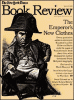 Zwei neue Napoleon-Biografien sind anzuzeigen, die eine verfasst von Paul Johnson (
 Adam Cohens (Erfolgs-)Geschichte des Internetauktionshauses eBay (
 Ein "erstklassiges intellektuelles Abenteuer" sei das Buch, schreibt George Johnson in einer
  In ihrem